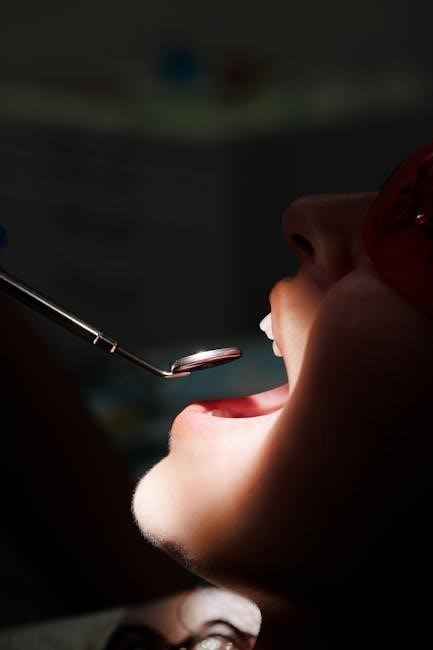
Teeth whitening shade guides are essential tools for dentists and patients alike‚ facilitating consistent and objective assessment of tooth color changes.
These guides‚ like the VITA systems‚ offer standardized color comparisons‚
helping to track whitening progress and manage patient expectations effectively.
Various options‚ from porcelain to digital formats‚ are available to ensure accurate shade matching before‚ during‚ and after treatment.
What is a Teeth Whitening Shade Guide?
A teeth whitening shade guide is a standardized tool used in dentistry to assess and document the color of a patient’s teeth. These guides typically consist of a series of porcelain or plastic tabs‚ each representing a different shade of tooth color.
Systems like the VITA Classical and VITA 3D-Master are commonly employed‚ offering a visual spectrum for comparison. They aren’t simply arbitrary colors; they represent a systematic way to quantify tooth shade.
Guides‚ available as comparison plates or cards‚ allow dental professionals to objectively determine a baseline shade before whitening and then monitor changes throughout the process. Some guides‚ like those found on Amazon‚ include up to 20 different color levels for precise tracking.
Why Use a Shade Guide?
Utilizing a teeth whitening shade guide is crucial for several reasons. Firstly‚ it provides an objective record of a patient’s initial tooth color‚ establishing a baseline for measuring whitening success. Secondly‚ it aids in managing patient expectations by visually demonstrating achievable results.
Without a guide‚ shade assessment is subjective and prone to inconsistency. Shade guides‚ like the ones available on Amazon‚ allow for “before and after” comparisons‚ clearly illustrating the degree of whitening achieved.
Furthermore‚ they facilitate communication between dental professionals and laboratories‚ ensuring accurate shade matching for restorations. Consistent use of a guide‚ even for at-home whitening‚ helps track progress and evaluate treatment effectiveness.

Understanding Different Shade Guide Systems
Various shade guide systems exist‚ including VITA Classical‚ VITA 3D-Master (with bleached shades)‚ and others available on platforms like Amazon‚ each offering unique color organization.
VITA Classical Shade Guide
The VITA Classical Shade Guide represents a foundational system in dentistry for tooth color determination. It comprises a series of porcelain teeth‚ meticulously crafted to represent a range of natural tooth shades.
This guide organizes shades based on three primary characteristics: hue‚ chroma (intensity)‚ and value (lightness). Dentists utilize these tabs to visually compare a patient’s teeth‚ establishing a baseline shade before any whitening procedure.
While effective‚ the VITA Classical system has limitations‚ particularly in capturing the nuances of bleached teeth. Consequently‚ VITA developed the 3D-Master guide to address these shortcomings‚ incorporating a more comprehensive range of shades‚ including those achieved through whitening treatments. Despite this‚ the Classical guide remains a valuable reference point.
VITA 3D-Master Shade Guide
The VITA 3D-Master Shade Guide builds upon the Classical system‚ offering a more sophisticated and comprehensive approach to shade matching. It introduces a three-dimensional color system‚ utilizing L (lightness)‚ A (red-green)‚ and B (yellow-blue) values to precisely define tooth color.
A key advantage of the 3D-Master guide is its inclusion of shades specifically designed for bleached teeth‚ addressing a limitation of the Classical system. This allows for more accurate assessment and documentation of whitening results.
The guide features a wider range of tabs‚ enabling dentists to pinpoint a patient’s shade with greater accuracy. It’s considered a gold standard for its ability to replicate natural tooth color variations and facilitate consistent shade communication.
Other Popular Shade Guide Systems
Beyond VITA‚ several other shade guide systems are utilized in dentistry. These alternatives aim to provide accurate and reliable shade matching for teeth whitening procedures. Systems like Chromascop‚ and those offered by companies specializing in dental materials‚ present different approaches to color categorization.

Some guides‚ like the LVCHEN Dental Shade Guide‚ feature a simplified 20-color scale with a mirror for easy comparison‚ suitable for professional and potentially at-home use. Others‚ such as the Smiledt 3D guide‚ utilize porcelain tabs for a realistic representation of tooth color.
The choice of system often depends on dentist preference‚ workflow‚ and the specific needs of the patient and treatment plan.

Components of a Typical Shade Guide
Standard shade guides include individual tabs representing different hues‚ shade numbers for identification‚ and rely heavily on consistent lighting for accurate color perception.
These elements work together to facilitate precise teeth whitening assessment.
Individual Shade Tabs
Individual shade tabs are the core of any teeth whitening shade guide‚ representing distinct tooth colors for comparison. These tabs are typically constructed from porcelain or durable plastic‚ designed to mimic natural tooth enamel.
Each tab displays a specific shade‚ carefully calibrated to provide a visual reference point. Guides like the VITA Classical and 3D-Master systems feature a series of these tabs‚ arranged in a logical sequence from lighter to darker shades.
The tabs allow dental professionals to visually match a patient’s pre-whitening tooth color‚ and then track changes throughout the whitening process. They are crucial for objective assessment‚ minimizing subjective interpretation of color variations.
Some guides‚ like those available on Amazon‚ contain up to 20 different color levels.
Shade Numbers and Designations
Shade numbers and designations provide a standardized system for identifying and communicating tooth color. The VITA Classical guide utilizes a simple A-D hue‚ 1-4 chroma‚ and 1-3 value system. For example‚ A3 represents a specific shade within that range.
The VITA 3D-Master system expands on this‚ incorporating L (lightness)‚ A (red/pink hue)‚ and B (yellow/blue hue) values for more precise color mapping. These values allow for a more nuanced differentiation between shades.
Other systems‚ like those found on Amazon‚ may simply use numerical designations from 1 to 20‚ representing increasing darkness. Consistent use of these designations ensures clear communication among dental professionals and accurate documentation of whitening results.
Proper recording of these numbers is vital for tracking changes.
The Importance of Consistent Lighting
Consistent lighting is paramount when utilizing teeth whitening shade guides for accurate color assessment. Variations in ambient light – sunlight‚ fluorescent‚ or incandescent – significantly alter perceived tooth color‚ leading to inaccurate readings.
Dental professionals typically employ standardized lighting conditions‚ such as daylight-balanced lamps‚ to minimize these discrepancies. Amazon product descriptions emphasize comparing teeth color “under any light‚” but this is suboptimal.
Ideally‚ shade matching should occur in a controlled environment with consistent illumination. This ensures reliable pre-whitening‚ during-treatment‚ and post-whitening evaluations. Any changes observed are genuinely attributable to the whitening process‚ not lighting fluctuations. Accurate documentation relies on this consistency.

Using a Shade Guide: A Step-by-Step Approach
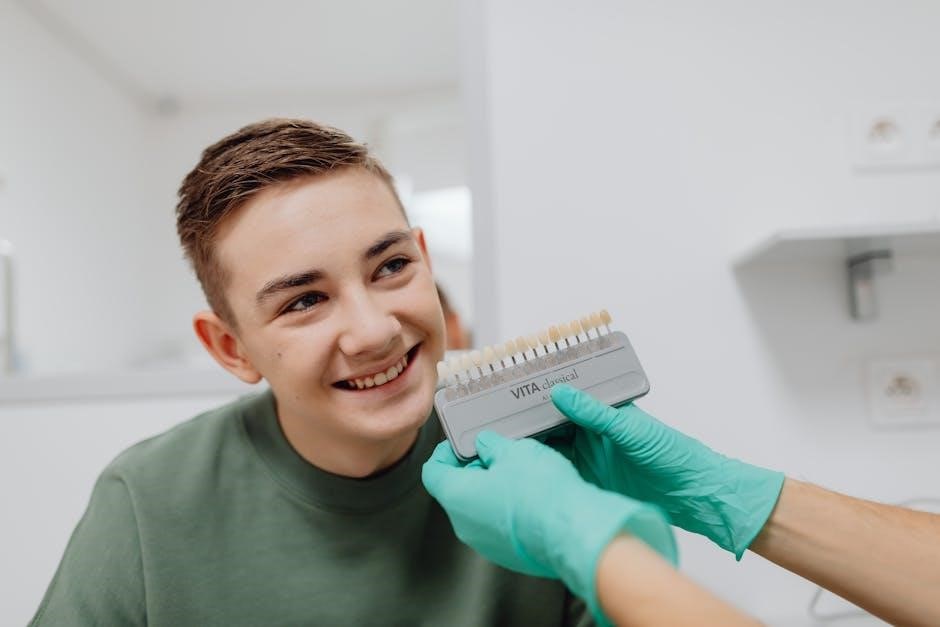
Effective shade guide use involves initial assessment‚ monitoring changes throughout whitening‚ and final evaluation. Comparing teeth to the guide before‚ during‚ and after is key.
Pre-Whitening Shade Assessment
Establishing a baseline shade before commencing any whitening procedure is paramount for accurate tracking and patient satisfaction. This initial assessment requires careful attention to detail and standardized conditions.
Utilize a shade guide – VITA Classical or 3D-Master are common choices – under consistent‚ diffused lighting‚ avoiding direct sunlight or artificial hues. Systematically compare each tooth to the shade tabs‚ noting the closest match.
Record the shade for each tooth‚ particularly the centrals‚ as these serve as primary reference points. Documenting this pre-whitening shade is crucial for demonstrating treatment efficacy and aligning expectations. A thorough pre-treatment assessment sets the stage for a successful outcome.
During Whitening Shade Monitoring
Monitoring shade changes throughout the whitening process allows for adjustments to treatment time or concentration‚ optimizing results. Periodic assessments‚ typically every 15-20 minutes‚ are recommended.
Re-evaluate the teeth using the same shade guide and lighting conditions as the pre-whitening assessment. Observe incremental shifts in color‚ noting any discrepancies between teeth.
Document these interim shade readings to track progress and identify potential plateaus. This proactive approach ensures the whitening agent is effectively lightening the teeth without causing sensitivity or unevenness. Consistent monitoring‚ guided by shade tabs‚ maximizes treatment control.
Post-Whitening Shade Evaluation
Final shade assessment‚ using the teeth whitening shade guide‚ is crucial for verifying treatment success and patient satisfaction. Compare the post-whitening shade to the initial pre-treatment shade record.
Evaluate all teeth individually‚ noting the achieved shade level. Document the final shade numbers meticulously‚ utilizing the guide’s designations (like VITA’s L‚ A‚ and B values).
Discuss the results with the patient‚ relating the shade numbers to their expectations. Confirm they are pleased with the outcome. This final evaluation solidifies the treatment’s effectiveness and provides a baseline for future maintenance or touch-up procedures.

Interpreting Shade Guide Results
Shade guide results require understanding the color dimensions – L (lightness)‚ A (red/pink)‚ and B (yellow/blue) – to accurately assess whitening changes and patient outcomes.
Understanding the L‚ A‚ and B Values (VITA 3D-Master)
The VITA 3D-Master system utilizes a comprehensive approach to shade determination‚ moving beyond traditional hue-based systems. It employs three coordinates: L‚ A‚ and B‚ to precisely define tooth color. ‘L’ represents lightness‚ ranging from dark (low value) to light (high value).
‘A’ indicates the red-pink hue‚ with positive values denoting redder shades and negative values indicating more pinkish tones. Finally‚ ‘B’ represents yellowness‚ where positive values signify yellower shades and negative values suggest more bluish hues.
By quantifying these three dimensions‚ the VITA 3D-Master allows for a more nuanced and accurate representation of tooth color‚ facilitating consistent shade matching and tracking of whitening results. This system also includes bleached shades for comparison.
Relating Shade Numbers to Patient Expectations
Effective communication is crucial when discussing whitening results with patients. Shade guides‚ while objective‚ need translation into understandable terms. Patients often have unrealistic expectations fueled by media portrayals of extremely white teeth.
Using the shade guide‚ demonstrate the achievable range of whitening‚ showing before-and-after comparisons with corresponding shade numbers. Explain that moving several shades lighter is a significant improvement‚ even if it doesn’t reach a “Hollywood white.”
Emphasize that individual tooth structure and sensitivity influence outcomes. Managing expectations proactively‚ by relating shade numbers to realistic possibilities‚ fosters patient satisfaction and avoids disappointment.
Documenting Shade Changes
Thorough documentation of shade changes is vital for treatment monitoring and legal protection. Before initiating whitening‚ record the initial shade using a shade guide‚ noting the specific system (e.g.‚ VITA 3D-Master) and shade number.
During treatment‚ periodically reassess and document shade progression. Post-whitening‚ record the final shade and compare it to the baseline. Include photographs alongside shade readings for a comprehensive record.
Detailed documentation allows for objective evaluation of treatment efficacy‚ facilitates informed discussions with patients‚ and provides evidence of care should any concerns arise. Consistent recording practices are paramount for professional accountability.
Types of Shade Guides Available
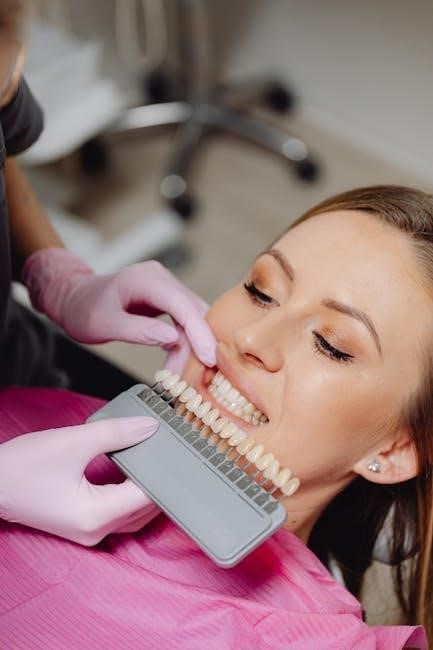
Various shade guides exist‚ including porcelain‚ plastic‚ and increasingly‚ digital options. Porcelain guides offer realistic color‚ while plastic provides affordability.
Digital guides enhance precision and consistency in shade matching procedures.
Porcelain Shade Guides
Porcelain shade guides are considered the gold standard due to their remarkable ability to mimic natural tooth enamel. These guides‚ often featuring a series of porcelain tabs‚ provide a highly accurate visual representation of different tooth shades.
The material’s translucency and texture closely resemble actual teeth‚ minimizing the influence of surrounding colors and lighting conditions during shade selection.
Brands like VITA are well-known for their high-quality porcelain shade guides‚ offering dentists a reliable tool for consistent and precise shade matching.
However‚ porcelain guides can be more expensive and fragile compared to plastic alternatives‚ requiring careful handling and maintenance to ensure longevity and accuracy.
Plastic Shade Guides
Plastic shade guides represent a more affordable and durable alternative to porcelain guides‚ widely utilized in dental practices. Constructed from acrylic or similar polymers‚ these guides offer a practical solution for routine shade matching and monitoring during teeth whitening procedures.
While not replicating the exact optical properties of natural teeth as precisely as porcelain‚ plastic guides still provide a reliable visual reference for assessing color changes.
Many guides‚ like those available on Amazon‚ feature multiple shades arranged in a systematic order‚ facilitating easy comparison before and after whitening treatments.
Their robustness makes them less prone to chipping or breakage‚ contributing to a longer lifespan and reduced replacement costs.
Digital Shade Guides
Digital shade guides represent the cutting edge of tooth color assessment‚ offering enhanced precision and objectivity compared to traditional methods. These systems utilize spectrophotometers or digital cameras to capture and analyze tooth color data‚ minimizing subjective interpretation.
Unlike visual comparisons with physical shade tabs‚ digital guides provide quantifiable color values – L‚ A‚ and B – allowing for precise documentation of shade changes throughout the whitening process.
The future of shade matching leans heavily towards this technology‚ with artificial intelligence (AI) poised to further refine shade selection and prediction.
Digital guides streamline workflows and improve communication between dental professionals and patients‚ ensuring optimal aesthetic outcomes.
Shade Guides for At-Home Whitening
At-home whitening relies on comparing teeth to shade guides‚ though results are often less predictable and assessment can be limited by lighting conditions.
Comparing At-Home Results to Shade Guides
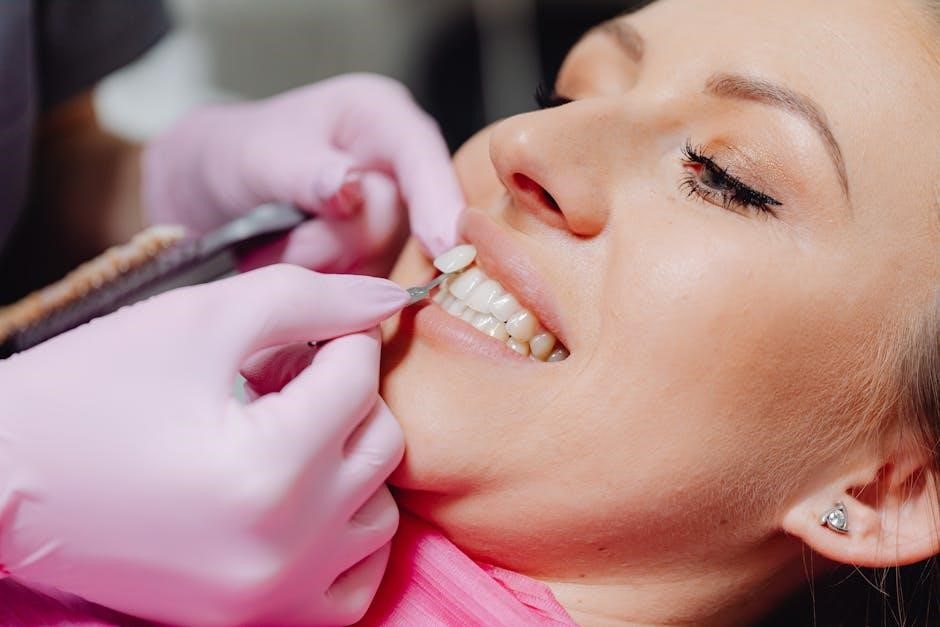
Evaluating at-home whitening involves comparing teeth to a shade guide‚ typically before starting and after completing the treatment. However‚ achieving accurate comparisons can be challenging.
Unlike professional dental settings with controlled lighting‚ home environments vary significantly‚ impacting color perception. Consistent lighting is crucial; natural daylight is preferable to artificial sources.
Patients should use a mirror and follow the guide’s instructions carefully‚ noting any observed changes. It’s important to remember that at-home kits generally achieve less dramatic results than in-office procedures.
Comparing before-and-after photos alongside the shade guide can also aid in visualizing progress‚ offering a more objective assessment of the whitening achieved;
Limitations of At-Home Shade Assessment
Self-assessment using shade guides at home presents several limitations. Subjectivity plays a significant role‚ as individuals may perceive colors differently.
Inconsistent lighting conditions drastically affect accuracy; shadows and varying light temperatures distort color perception. Furthermore‚ patients lack the professional training to accurately interpret subtle shade variations.
At-home shade guides‚ often paper or plastic‚ may not perfectly replicate the nuances of natural teeth. The absence of a dental professional’s expertise can lead to misinterpretations of results.
Therefore‚ at-home assessments should be considered approximate and are best supplemented with a professional evaluation for a truly accurate shade determination.

The Future of Shade Matching
Digital shade matching and artificial intelligence are revolutionizing the process‚ offering enhanced precision and objectivity in teeth whitening shade guide selection.
These technologies promise more consistent and personalized results for patients.
Digital Shade Matching Technology
Digital shade matching represents a significant advancement over traditional methods utilizing physical teeth whitening shade guides. These systems employ spectrophotometers or digital cameras to capture precise color data of teeth‚ minimizing subjective interpretation.
The captured data is then analyzed using specialized software‚ providing an objective assessment of tooth shade based on established color scales like CIELAB. This technology allows for more accurate documentation of pre- and post-whitening shades‚ facilitating better treatment planning and monitoring.
Furthermore‚ digital shade matching can aid in communication between dental professionals and dental laboratories‚ ensuring consistent shade reproduction in restorative procedures. The integration of digital technology promises to streamline the shade selection process and enhance the overall aesthetic outcome of teeth whitening treatments.
Artificial Intelligence in Shade Selection
Artificial Intelligence (AI) is emerging as a transformative force in teeth whitening shade guide technology‚ promising to revolutionize shade selection accuracy and efficiency. AI algorithms can be trained on vast datasets of tooth images and corresponding shade values‚ learning to predict optimal shades with remarkable precision.
These systems can analyze factors beyond simple color‚ such as translucency and surface texture‚ to provide a more holistic shade assessment. AI-powered tools can also assist in predicting whitening outcomes‚ helping dentists set realistic patient expectations.
By automating and refining the shade selection process‚ AI minimizes human error and enhances the consistency of results‚ ultimately leading to improved patient satisfaction and aesthetic outcomes in teeth whitening procedures.