
This guide provides vital operating instructions, safety features details, and maintenance schedules, ensuring a safe and enjoyable ownership experience with your vehicle.
Ford provides resources for locating the most current information, emphasizing the owner’s manual as the primary source for detailed safety and operational guidance.
Accessing the Official Manual
Locating the official 2017 Ford F-150 owner’s manual is straightforward. Ford provides digital access through their official website, allowing owners to view, download, or print the manual as needed.

Ensure you select the correct year and model to guarantee you have the accurate information for your specific vehicle. Your Ford dealership can also provide a physical copy if requested, offering a convenient alternative.
This allows for quick navigation to specific topics and easy access to information. Conversely, the PDF version is a static document, ideal for downloading and printing a physical copy for offline use.
The PDF version mirrors the manual as released with the vehicle, offering a faithful reproduction of the original documentation. Choosing between the two depends on your preferred method of access and usage.
Importance of Consulting the Owner’s Manual
Consulting your 2017 Ford F-150 owner’s manual is paramount for safe and efficient vehicle operation. It’s the definitive source for understanding all aspects of your truck, from routine maintenance to complex system functionalities.
The manual details critical safety features like the airbag system and Ford Co-Pilot360, ensuring you utilize them correctly. It also provides essential information on scheduled maintenance intervals and fluid recommendations, preserving your vehicle’s longevity.
Ford emphasizes that the dealer is the best source for current information, but the owner’s manual remains the primary guide. Ignoring it could lead to improper operation, potential damage, or compromised safety.
Familiarize yourself with its contents to maximize your ownership experience and address any troubleshooting needs effectively.
Vehicle Overview & Key Features
The 2017 F-150 boasts diverse engine options, trim levels, and packages, offering customizable performance and comfort, detailed within the comprehensive user manual.
Engine Specifications & Options
The 2017 Ford F-150 offered a robust selection of engines, meticulously detailed within the owner’s manual. These included the 3.5L V6, the 2.7L EcoBoost V6, the 5.0L V8, and the powerful 3.5L EcoBoost V6.
Each engine provided unique performance characteristics, catering to diverse needs – from efficient daily driving to demanding towing and hauling. The manual specifies horsepower and torque figures for each configuration, alongside crucial information regarding fuel requirements and recommended maintenance schedules.
Furthermore, the user manual outlines available engine upgrades and options, such as cylinder deactivation technology for improved fuel economy, providing owners with a complete understanding of their vehicle’s powertrain capabilities.
Trim Levels & Available Packages
The 2017 Ford F-150 boasted a diverse range of trim levels, comprehensively outlined in the user manual – from the work-oriented XL to the luxurious Limited. Each trim offered a unique combination of standard features and available upgrades.
The manual details package options like the FX4 Off-Road Package, the XLT Chrome Appearance Package, and the Technology Package, enhancing functionality and aesthetics. Owners can find precise descriptions of included equipment, such as upgraded infotainment systems, driver-assistance technologies, and interior refinements.
Understanding these options is crucial for maximizing the vehicle’s potential, and the manual serves as an invaluable resource for identifying features specific to each F-150 configuration.
Exterior Features & Lighting
The 2017 Ford F-150 user manual thoroughly details its exterior components, from the robust body construction to the various lighting systems. It explains operation of features like the power-adjustable mirrors, remote start, and tailgate functions.
Regarding lighting, the manual covers headlight adjustments, fog lamp usage, and the operation of the integrated trailer brake controller. It also describes the available LED lighting options, including the signature lighting and cargo area illumination.
Owners can find guidance on proper care and maintenance of exterior elements, ensuring longevity and optimal performance. Understanding these features enhances both functionality and safety while operating the vehicle.
Interior Features & Comfort
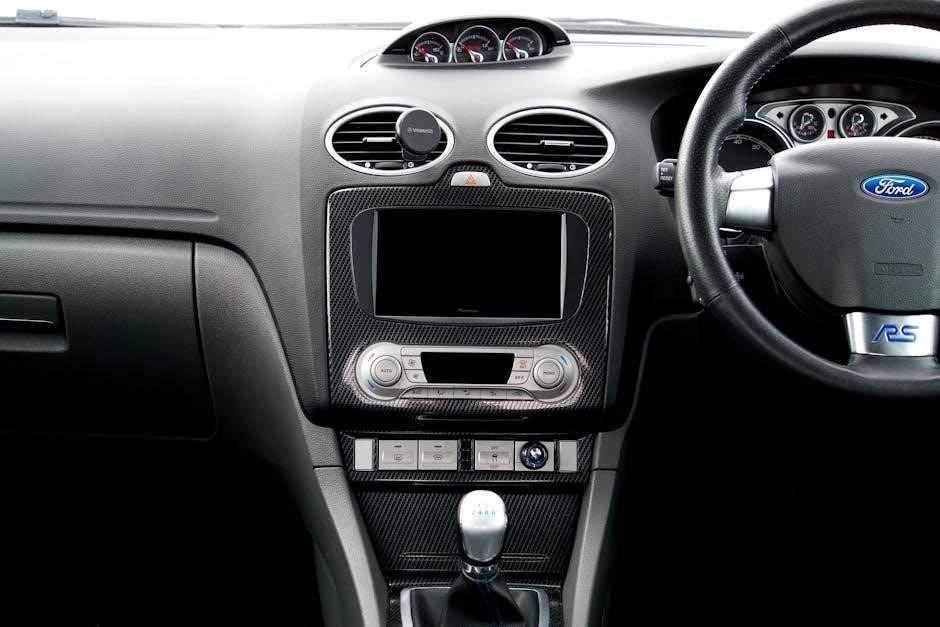
The 2017 Ford F-150 user manual provides detailed explanations of the truck’s interior features, focusing on comfort and convenience. It covers the operation of the infotainment system, including SYNC 3, Bluetooth connectivity, and navigation features.
The manual outlines adjustments for seats – including power-adjustable options with memory settings – and climate control systems, ensuring a personalized driving experience. It also details the use of interior lighting, storage compartments, and available features like premium audio systems.
Understanding these features maximizes enjoyment and usability. The manual also addresses safety aspects within the cabin, like seatbelt operation and child safety features, promoting a secure environment.

Operating Your Vehicle
The 2017 F-150 manual details starting, stopping, and driving procedures, alongside explanations of available driving modes for optimized performance and control.
Starting & Stopping Procedures

The 2017 Ford F-150 owner’s manual provides detailed instructions for safely starting and stopping your vehicle. Before starting, ensure the parking brake is engaged and the transmission is in Park (P). The manual clarifies the ignition sequence, including the use of the key or push-button start system.
It also outlines procedures for various starting conditions, such as cold weather starts. When stopping, the manual emphasizes gradually applying the brakes and bringing the vehicle to a complete halt before shifting into Park. Proper shutdown procedures are detailed to prevent potential damage to the vehicle’s systems. Always consult the manual for specific instructions related to your F-150’s configuration and features, ensuring a smooth and secure operation every time.
Driving Modes & Performance
The 2017 Ford F-150 user manual details the available driving modes designed to optimize performance for various conditions. These modes, selectable through the vehicle’s interface, influence throttle response, transmission shifting, and stability control settings.
The manual explains how to utilize modes like Normal, Sport, Tow/Haul, and Snow/Grass, highlighting their specific benefits. It also covers performance characteristics related to engine options and drivetrain configurations. Understanding these modes allows drivers to tailor the F-150’s behavior to maximize efficiency, capability, or driving enjoyment. The manual stresses the importance of selecting the appropriate mode for the current driving environment and load, ensuring optimal control and safety.
Fueling & Fluid Checks
The 2017 Ford F-150 owner’s manual provides detailed instructions on proper fueling procedures, including fuel type recommendations and filler door operation. It emphasizes the importance of using the correct octane rating for optimal engine performance.
Furthermore, the manual outlines a comprehensive guide to checking essential fluid levels – engine oil, coolant, brake fluid, power steering fluid, and windshield washer fluid. It details the location of dipsticks and reservoirs, along with acceptable fluid level ranges. Regular fluid checks, as described in the manual, are crucial for maintaining vehicle reliability and preventing potential mechanical issues. The manual also highlights the importance of using Ford-approved fluids to ensure compatibility and longevity.

Safety Features & Systems
The 2017 F-150 manual details airbag deployment, Ford Co-Pilot360 features, and emergency assistance systems, prioritizing occupant protection and driver awareness.
Airbag System & Deployment
Your 2017 Ford F-150 is equipped with an advanced airbag system designed to provide crucial protection during various collision scenarios. The owner’s manual thoroughly explains the components, including frontal, side, and curtain airbags, detailing their specific deployment characteristics.
Understanding how and when airbags deploy is vital; they are triggered by rapid deceleration, not necessarily by the severity of visible damage. The manual emphasizes the importance of proper seatbelt usage, as airbags are most effective when used in conjunction with them.
It also outlines potential risks associated with airbag deployment, particularly for children and individuals with certain medical conditions, stressing the need to follow all safety precautions outlined within the manual for optimal protection.
Ford Co-Pilot360 Features
While the 2017 Ford F-150 predates the fully integrated Ford Co-Pilot360 suite, the owner’s manual details several driver-assist technologies that foreshadowed its development. These features aim to enhance driver awareness and safety on the road.

The manual explains functionalities like Blind Spot Information System (BLIS), which alerts drivers to vehicles in their blind spots, and Cross-Traffic Alert, assisting during reversing maneuvers. It also covers available features such as Lane-Keeping System, providing steering support to maintain lane position.
Understanding the limitations of these systems is crucial; they are aids, not replacements for attentive driving. The manual stresses the driver’s responsibility to remain in control and aware of surroundings at all times, even with these technologies engaged.
Emergency Assistance Features
The 2017 Ford F-150 owner’s manual thoroughly outlines critical emergency assistance features designed to provide support in various situations. It details the operation of the 911 Assist feature, which can automatically call for help in the event of a severe crash when a paired cell phone is present.
The manual also explains the SYNC Connect system’s capabilities, including roadside assistance access and remote vehicle monitoring. Information on manual emergency brake operation and hazard light usage is clearly presented for quick reference during unforeseen events.
Furthermore, the guide emphasizes the importance of knowing your vehicle’s location and having essential emergency contact information readily available, promoting preparedness and a swift response in critical circumstances.

Maintenance & Care
The 2017 F-150 manual details scheduled maintenance, fluid recommendations, and tire care, ensuring optimal vehicle performance and longevity through consistent upkeep.
Scheduled Maintenance Intervals
Your 2017 Ford F-150’s longevity relies on adhering to the scheduled maintenance intervals outlined in the owner’s manual. These intervals are categorized by mileage and normal or severe driving conditions.
Routine checks, like oil and filter changes, are crucial, typically recommended every 7,500 to 10,000 miles depending on oil type and usage. Tire rotations should occur every 5,000 miles to promote even wear.
More extensive services, including fluid level inspections (coolant, brake, power steering), belt and hose checks, and air filter replacements, are scheduled at higher mileage milestones. The manual provides a detailed chart outlining these intervals.
Severe driving conditions – frequent towing, off-roading, or stop-and-go traffic – necessitate more frequent maintenance to prevent premature wear and ensure reliable operation. Always consult the manual for specific recommendations.
Fluid Recommendations & Capacities
Maintaining proper fluid levels with the correct specifications is vital for your 2017 Ford F-150’s performance. The owner’s manual details fluid recommendations for engine oil, transmission fluid, coolant, brake fluid, power steering fluid, and differential lubricants.
Engine oil viscosity should align with climate conditions, typically 5W-20 or 5W-30. The manual specifies the appropriate transmission fluid type, crucial for smooth shifting. Coolant must be a Ford-approved formulation to prevent corrosion.
Capacities vary based on engine and drivetrain configurations; The manual lists precise capacities for each fluid, ensuring accurate refills during maintenance. Using incorrect fluids can lead to component damage and void warranty coverage.
Always refer to the owner’s manual for the most accurate and up-to-date fluid specifications and capacities for your specific 2017 F-150 model.
Tire Information & Maintenance
Your 2017 Ford F-150’s owner manual provides crucial tire information, including recommended tire sizes, load ratings, and inflation pressures. Maintaining correct tire pressure, found on the door jamb sticker, optimizes handling, fuel efficiency, and tire lifespan.
Regular tire inspections are essential for identifying wear patterns, damage, and uneven tread depth. The manual details proper tire rotation procedures to promote even wear and extend tire life. It also outlines speed ratings and their importance.
Understanding tire sidewall markings is key to interpreting tire specifications. The manual explains these markings, ensuring you select appropriate replacement tires. Proper tire maintenance contributes significantly to vehicle safety and performance.
Always consult the owner’s manual for specific tire recommendations and maintenance guidelines tailored to your 2017 F-150’s configuration.

Troubleshooting & Common Issues
The 2017 F-150 manual assists with diagnosing issues, explaining diagnostic trouble codes (DTCs), jump starting, and resolving basic electrical system problems.
It’s a valuable resource for quick problem identification and potential solutions before seeking professional service.
Diagnostic Trouble Codes (DTCs)
The 2017 Ford F-150’s onboard diagnostic system utilizes Diagnostic Trouble Codes (DTCs) to identify specific issues within the vehicle’s various systems. These codes, stored in the vehicle’s computer, provide technicians – and informed owners – with valuable clues regarding the nature of a problem.
Your owner’s manual doesn’t typically list all DTCs, as there are hundreds, but it will explain how to access the stored codes using a scan tool. Understanding these codes can help pinpoint the source of a malfunction, ranging from minor sensor failures to more significant component issues.
While DTCs offer a starting point, it’s crucial to remember they indicate a symptom, not necessarily the root cause. Further diagnosis is often required to accurately identify and resolve the underlying problem. Consulting a qualified technician is recommended for complex issues.
Jump Starting Procedures
If your 2017 Ford F-150’s battery is depleted, a jump start can get you going, but it’s crucial to follow the correct procedure to avoid damage. Your owner’s manual details these steps precisely, emphasizing safety precautions.
Generally, you’ll need jumper cables and a functioning vehicle. Connect the positive (+) cable to the positive terminal of the discharged battery, then to the positive terminal of the good battery. Next, connect the negative (-) cable to the negative terminal of the good battery, and finally, to a grounded metal surface on your F-150, away from the battery.
Start the good vehicle, let it run for a few minutes, then attempt to start your F-150; If it doesn’t start immediately, wait a few more minutes before trying again. Disconnect the cables in the reverse order of connection.
Basic Electrical System Issues
The 2017 Ford F-150’s electrical system is complex, but some issues are relatively straightforward. A blown fuse is a common culprit for non-functioning accessories like the radio or power windows; your owner’s manual provides a fuse box diagram to locate and replace them.
Dim headlights or a failing charging system can indicate a problem with the alternator. If the battery light illuminates on the dashboard, it suggests an issue with the charging system and requires immediate attention from a qualified technician.
Loose connections or corroded terminals can also cause electrical problems. Regularly inspect battery terminals and wiring for any signs of corrosion or damage. Refer to the manual for specific component locations and troubleshooting guidance.

Warranty Information & Resources
Your 2017 F-150 is covered by Ford’s warranty; details are in the owner’s manual. Locate dealerships and support through Ford’s official website for assistance.
Ford Warranty Coverage Details
The 2017 Ford F-150’s warranty provides peace of mind, covering defects in materials or workmanship. Typically, a basic warranty extends for 3 years/36,000 miles, safeguarding against many repairs. A more comprehensive powertrain warranty often covers 5 years/60,000 miles, protecting the engine, transmission, and drive systems.
Specific coverage details, including exclusions and limitations, are thoroughly outlined within the official owner’s manual. Ford also offers extended warranty options for continued protection beyond the initial coverage period. Understanding these terms is crucial for maximizing your warranty benefits. Always retain your purchase documents and maintenance records as proof of service, potentially aiding any warranty claims.
For complete and accurate information, always refer to the warranty booklet included with your vehicle or consult the Ford customer service website.
Locating Ford Dealerships & Support
Finding a qualified Ford dealership for service or support is straightforward. Ford’s official website features a comprehensive “Find a Dealer” tool, allowing you to locate nearby dealerships based on your zip code or city. These dealerships offer certified technicians, genuine Ford parts, and warranty service;
Beyond dealerships, Ford provides robust customer support through its website and a dedicated customer relationship center. You can access online resources, FAQs, and owner forums for assistance. For immediate help, a customer service representative is available via phone to address your concerns and guide you through troubleshooting or warranty processes;
The user manual itself often directs you to these resources, ensuring you have access to the support you need throughout your ownership experience.
Data Recording & Privacy
The 2017 Ford F-150, like many modern vehicles, incorporates data recording systems for various functions, including safety and performance analysis. The owner’s manual details the types of data collected, how it’s used, and your rights regarding this information.
Ford is committed to protecting your privacy. Data collected is primarily used to improve vehicle performance, enhance safety features, and comply with legal regulations. Information is generally anonymized and aggregated, but certain data may be linked to your vehicle identification number.
The manual outlines procedures for accessing and potentially correcting your data, as well as Ford’s policies regarding data security and sharing with third parties.